
Beyond the Word “Killer”: a month with orcas in Bremer Bay
- Feb 21
- 4 min read

I remember how mysterious it all felt a month ago.
Apex predators.
Boat sinkers off the coast of Portugal.
The marine mammal that hunts whales many times its own size.
I am not talking about the man in the grey suit. I’m talking about the orca — Orcinus orca.
The killer whale.
It sounds violent. Almost mythical. The dolphin that kills whales.
But is that the whole story?
The Reluctant Witness
I wasn’t sure I wanted to see a kill.
As a vegetarian and lifelong animal lover, the idea of watching an orca hunt another marine mammal didn’t sit comfortably with me. I had spent years defending animals, romanticising them, softening their edges.
And then it happened.
What I witnessed wasn’t cruelty.
It was nature.
And it was spectacular.
I expected to feel uncomfortable. Maybe even guilty.
Instead, I felt awe.
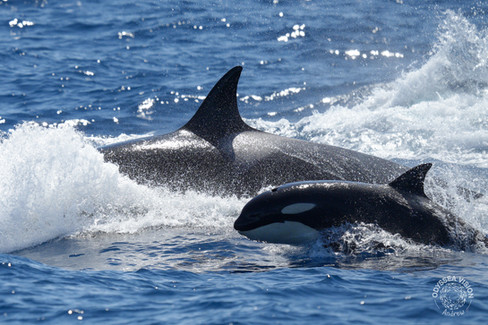
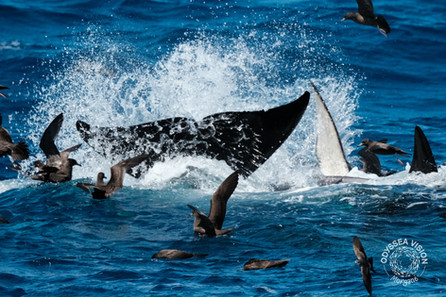
The coordination was immediate and precise. Individuals took positions. One surged forward, another flanked. There was no chaos, only timing. Strategy. Communication without words.
When the water turned red and the metallic smell lingered in the wind, it didn’t feel brutal. It felt deliberate. Efficient. Ancient.
I wasn’t watching violence.
I was watching intelligence at the top of the food chain.
Watching them coordinate in Bremer, I understood the same intelligence behind the footage I had seen of Antarctic orcas creating waves to wash seals off ice floes. Strategy like that isn’t instinct alone. It’s learned. It’s taught. It’s cultural.
Graphic Content Warning: Beaked Whale Hunt








More Than Muscle
Orca have one of the largest brains in the animal kingdom, nearly four times the weight of our own. But size alone doesn’t explain what we’re seeing.
When we talk about orcas, we often speak of them as one uniform species. But they simply aren’t.
Different populations eat differently. Hunt differently. Communicate differently. Even look different.
The Iberian Orcas for example, which you can find near Portugal and Spain have been targeting the rudders of sailboats in recent years. No human fatalities have occurred, and many scientists believe the behaviour may be socially learned, possibly a response to a previous negative interaction and spread within the group.
In the wild, there has never been a confirmed fatal orca attack on a human.
In captivity, the story is different.

Tilikum, a beautiful, big, male orca, captured off Iceland in 1983 was involved in the deaths of three people while held in marine parks. His story and the consequences of captivity became widely known through the documentary Blackfish.
Removed from his family. Removed from his culture.
The contrast forces an uncomfortable question: what changes when an apex predator is separated from its society?
There are multiple recognised ecotypes of orca worldwide, each with distinct diets, dialects, hunting strategies and physical traits.
They aren’t just apex predators.
They are complex societies.

In Antarctica, Type B orcas carry a grey wash and enlarged eye patches. In Bremer, the eyepatches are sharper, sleeker - like brushstrokes instead of clouds.
The offshore aggregation in Bremer Bay has been studied since the 1990s by researchers including John Totterdell. Yet even after decades of observation, these orcas do not fit neatly into a recognised eco type. They remain, in many ways, undefined.
They are one species, but not one shared tradition.
Recognition Changes Everything
We call them killer whales.
But after a month in their company, the word “killer” feels like the least interesting thing about them.
They stopped being “orcas”.

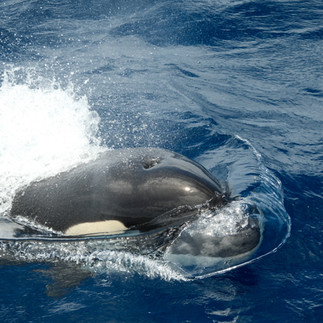




They became the female with the split dorsal fin.
The male with the nick on the trailing edge.
The juvenile who always surfaced first.
They became familiar.
The Antarctic Type B
On our last day, four unfamiliar fins appeared on the horizon.
At first, something felt off. The eyepatches were broader and softer in shape, the bodies washed in grey, the melon more rounded than the sleeker heads I had grown used to.
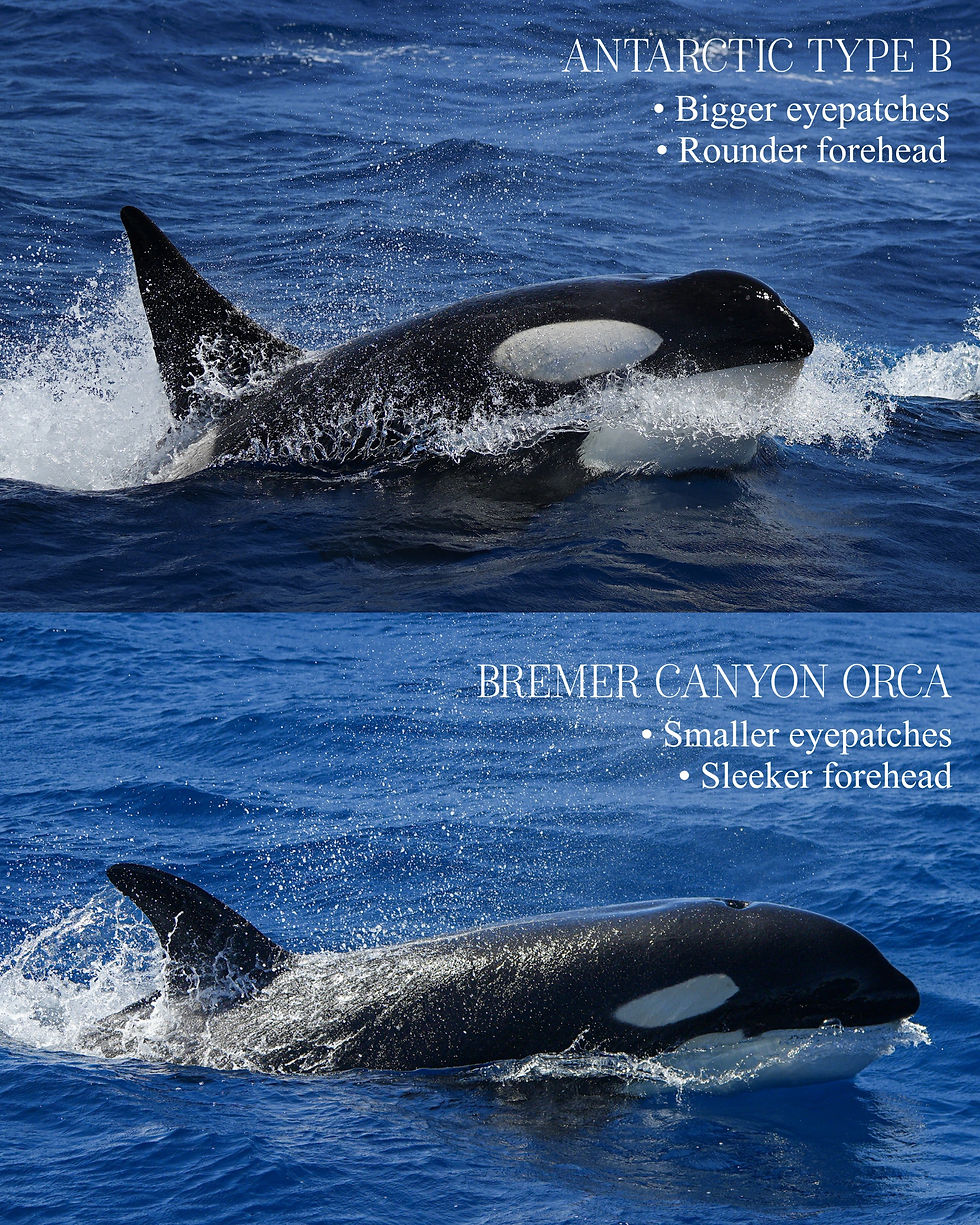
Antarctic Type B.
They moved in to steal food from “our” Bremer orcas. A reminder that even after a month, I had barely scratched the surface of this world.
To recognise the difference with my own eyes, to understand the significance of that sighting, felt monumental.
They are apex predators. That much is true.
But after a month offshore, what stayed with me wasn’t the blood in the water.
It was the precision.
The cooperation.
The distinctive curve in its dorsal I had come to recognise.
They sit at the top of the ocean’s hierarchy.
Not because they are ruthless,
but because they are intelligent.
And intelligence, in the wild, is the most formidable power of all.





To see more of our amazing wild orcas, check out our photos in client albums or ocean portfolio.


Comments