
Behind the photo: the truth we don’t see on elephant tours
- Apr 14
- 5 min read

This article might be the hardest I’ve ever written. I’ve started it many times, only to delete everything. It never felt right, like I wasn’t saying enough, or I was saying too much in the wrong way.
But these elephants deserve the best I can give them.
All I can do is try to tell their story. To give their pain a voice. To make you pause the next time you consider booking a tour or experience involving animal entertainment. Because it is never just about elephants. It is part of something much larger. A system that treats animals as resources rather than individuals with feelings. Whether it is the fishing industry or wildlife tourism, the pattern is the same: use, extract, discard.
Today, I want to share what I’ve learned about Asian elephants. I want to warn you that some of what follows is uncomfortable. But so is the truth.
The thing no one tells you


There is a word I wish I had never learned.
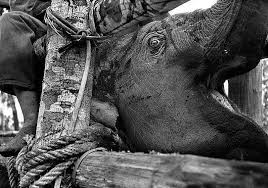
Phajaan.
It is often translated softly in tourist conversations as: training, breaking in, domestication. But what it actually means is something else entirely. It means breaking what is wild enough to resist.
A baby elephant is taken from the forest. Not gently. Not with understanding. With separation. The mother is driven away or killed. The calf is left alone - no herd, no voice, no familiar scent, no safety.
What follows is not training.
It is collapse, by design.
The elephant is restrained until movement becomes impossible. Sleep is disrupted until time loses meaning. Food and water are controlled until survival itself becomes uncertain. Pain is inflicted repeatedly - often with bullhooks, sticks, or other tools - leaving both physical and psychological wounds.
In that space, fear is repeated until resistance disappears. Not once. Not briefly. But long enough that exhaustion replaces defiance, and surrender is mistaken for obedience.
But it is not obedience.
It is what remains when a being learns that nothing it does will change its situation. So it stops trying.
And then we sell it as entertainment
Once an elephant is “broken,” it is not freed.
It is put to work.
Riding camps. Circuses. Street performances. Tourist photos. Entertainment.


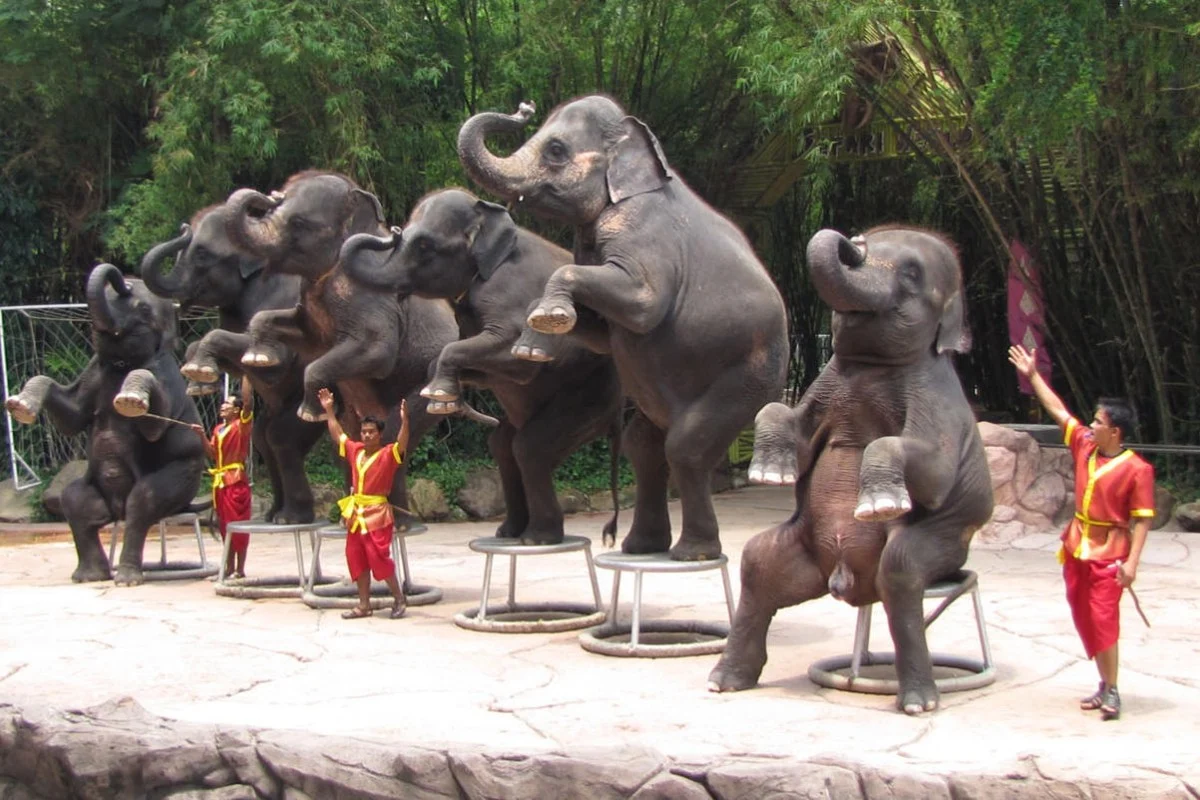
A body that has been psychologically dismantled is then expected to carry people, perform routines, and exist under constant demand, multiple times a day, in heat, on uneven ground, with injuries that never fully heal.
What we see is not wellbeing.
It is adaptation under captivity.
In performance settings, loud music and flashing lights overwhelm their sensitive senses. In logging, exhaustion and injury are constant, with some elephants working through open wounds or devastating terrain. Pregnancy, age, and illness rarely remove them from work.
The myth we tell ourselves
We say: they are strong, they can handle it.
But strength is not consent.
An elephant can carry weight. That has never been in question. What it cannot do is choose the life that weight represents when it is forced upon them.
And once you see that difference clearly, the entire industry changes shape.
What I saw that changed everything
At Elephant Nature Park, founded by Lek Chailert, I saw something different.
Not perfection. Not “happy endings.”
But recovery. Slow, uncertain, and real.


Elephants arriving there often flinch. Some refuse food. Some do not understand space without chains. They do not immediately become “free” in any simple sense, because freedom is something they have never known.
It has to be learned.
Somewhere behind every “experience” we buy, there is a lifetime of unlearning fear that was taught on purpose.
Not accidentally. Systematically.
Signs we learn to ignore
Once you know what to look for, you cannot unsee it.
A swaying elephant is not dancing. It is distress. Repetitive head movements are not performance. They are trauma expressed through the body.
Stillness is not calm. It is shutdown.

Hooks and sharp tools may still be used by some handlers to control movement through fear and pain. Yet tourists often miss it, because we are taught to see entertainment, not suffering.
But elephants are constantly communicating.
Not with words.
With bodies. With silence. With what they stop doing.
What ethical rescue actually looks like
At Elephant Nature Park, rescue is not a slogan. It is logistics, trauma care, and survival.
Since 2003, more than 125 elephants have been rescued. Many are elderly, often after lifetimes of work in tourism or logging.
Rescue does not end at arrival.
It begins there.
Transport itself can be traumatic. Many elephants panic in trucks, associating them with separation and pain. Some refuse to eat or drink, risking severe dehydration.
Each rescue is costly and complex, often requiring significant funding with no government support.
The park also rescues buffalo, dogs, and cats, etc. Expanding slowly into a space of care that is constantly under pressure.
What stands out most is not scale.
It is care.
Mahouts still exist, but the philosophy is different: no hooks, no domination, no forced performance.
Only relationship.


The complicated truth about sanctuaries
Not every place that calls itself a sanctuary is one.
The word is not protected, which makes it misleading. Some facilities allow limited tourism interaction while still keeping elephants chained or controlled behind the scenes.
That is what makes it dangerous.
As a visitor, the safest rule is simple: avoid direct interaction.
No riding. No bathing. No forced feeding or performances.
True sanctuaries prioritize distance, observation, and the elephant’s autonomy.
Across Thailand, Cambodia, and Laos, there are ethical projects working toward better models — but there is no simple map. Only responsibility.
Lek’s vision

Lek Chailert spent years working toward stronger animal protection laws in Thailand.
Her vision is simple in principle, radical in practice:
No hooks. No chains. No forced control.
Elephants living in herds again, making choices, moving freely within protected land.
Humans stepping back instead of stepping in.
Her message is always the same:
Love is stronger than fear.
And at Elephant Nature Park, that is not a concept.
It is something you can witness.
What we do with this knowledge
Most people do not support elephant tourism out of cruelty.
They do it out of not knowing.
But awareness changes that.
So if you love elephants:
don’t ride them, don’t watch them perform, don’t support street begging.
If you want to see them, choose carefully. Ask questions. Look beyond what is shown.
Because sometimes a holiday photo costs more than we are willing to understand.
It costs years.
It costs bodies.
It costs silence that was never consent.

What freedom looks like
At Elephant Nature Park, elephants are buried when they die. Trees are planted above them. Life continues over loss.
I think of Lucky, blind and gentle, who moved through the world by touch. She passed away shortly after we left — surrounded by her herd, caretakers, and those who had learned her language.
And I think of the others.
Playing in mud. Moving slowly. Resting without fear of being forced up again.
For a moment, it becomes possible to imagine something different.
Not perfect.
But kinder.
Closing
Education is where everything begins.
Not because people are cruel — but because they are not told the truth.
And once you know, you cannot unknow it.
Thank you for reading this far, and for holding space for something difficult.
If you feel called to learn more, I recommend the documentary Love & Bananas, which follows Elephant Nature Park and Lek’s work.
If you’d like to explore more of our experiences or photography with the elephants, you can find them here.
There is still good in the world.
And what we choose to support is part of how we keep it that way.
I loved to read that story, the way it is told to us how bad the situation actually is behind the pretty social media post we see. How it is shown to us how cruel it actually is to go to those places, what the prettiest is how you also show us that there is an other way to make a close contact with those pretty animals and humans! I can feel how deep those words are by looking at those pictures, you can feel that you look at those animals with love and respect wich give that unique feeling!
Great blog gave me some shivers and a better idea of that world!